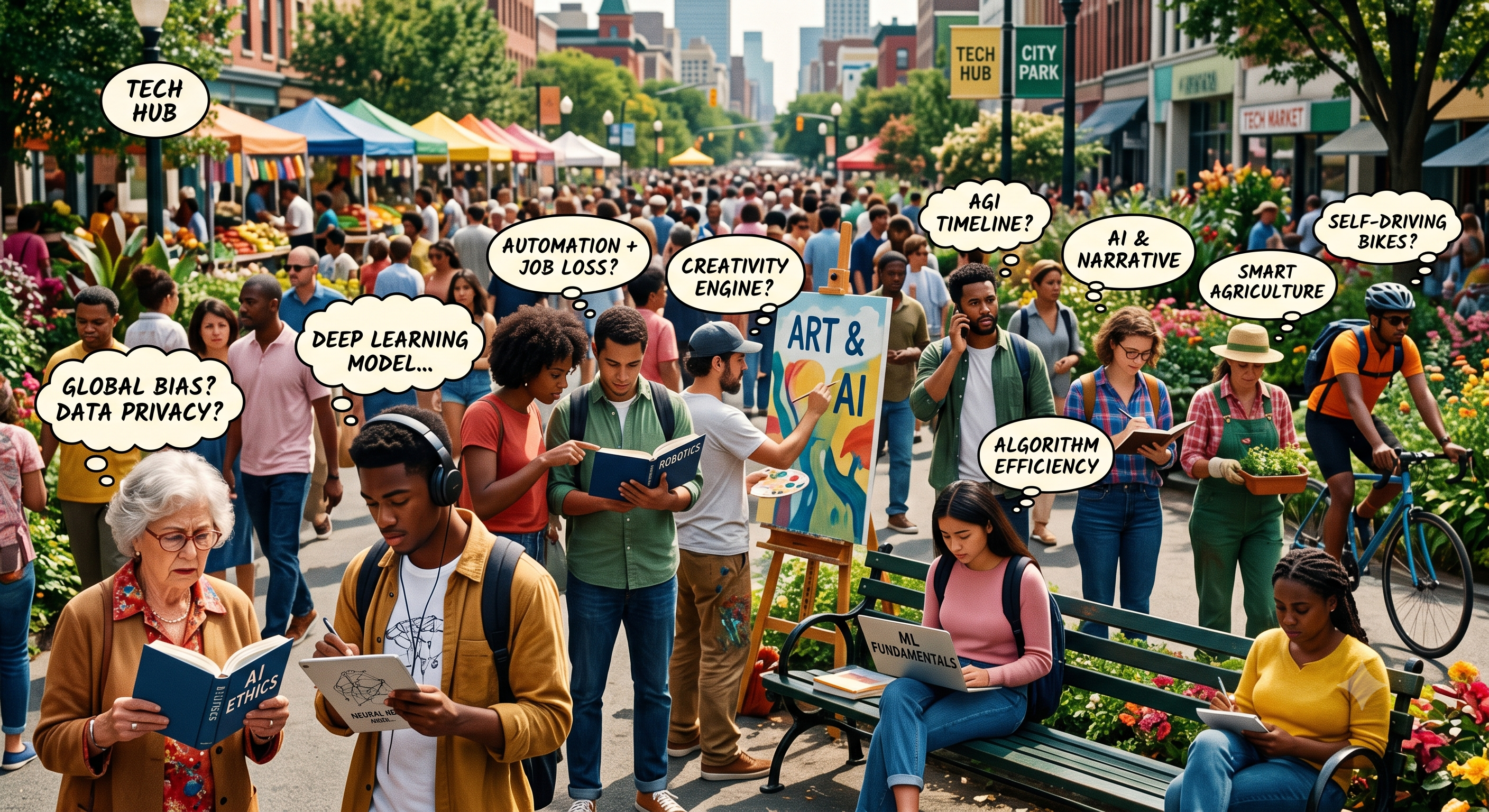
So many conversations these days revolve around AI... even when we know there are lots of other things to talk about. In almost every conversation I have these days, whether it's with CTOs, nonprofit Executive Directors, fellow fractional executives, team managers, or ICs, AI is truly the next frontier in that it's changing so much about the world around us. And with that comes lots of questions, fears, concerns, and new decisions we're making every day so I thought I'd start by writing about what I think is changing and how to think about all of these new AI tools and capabilities.
Even though AI tools have been around for a long time, in the past couple of years, generative AI has become much more accessible to the general public. The tools that allow us to interface with artificial intelligence and its ability to effectively create new works significantly change what we can utilize AI for and WHO can utilize AI. As with most things, the more people that adopt this new technology, the more known it becomes as well. People pass along ideas of what they're doing and how they're doing it. People build tools and workflows that are open sourced so that everyone can use them. And in today's world of being able to get so much information so quickly, not only through the internet, but via multiple streams of social media and communication, the proliferation of AI ideas, approaches, and how-tos are nonstop. And all of this constant information coming our way does two things. First, it creates an incredible hype cycle because of course I would love an army of agents to run my business for me (and on the surface, that looks reliable, doable, cheap, and easy to do). Second, it creates a massive sense of FOMO (fear of missing out) and it looks like everyone else is so far along with using AI and AI tools so you want to be there too, experimenting, utilizing the latest and greatest. And finally, that mix of hype and FOMO feed directly into our fears and concerns. What will happen to our jobs? What industries will AI replace? How will it affect our marketability, the economy, and lots of other aspects of our current day-to-day life in the next 10 years?
And realistically, from my perspective, it's a bit of all of it... everything is changing, but it's also ok. This piece came out a few months ago and I saw it passed around in almost every space I am in, from non-technical to technical, from nonprofit to corporate, but with a variety of reactions. Some people read it and got scared, others nodded their heads because they've been seeing exactly this in the spaces they work in, and others said certainly this piece is fear-mongering and we're no where near this level of change. Change is hard.
Here's what I truly think is changing: mostly, the parts of our work that feel tedious, time-consuming, and unenjoyable are outsourceable now. It is becoming much easier to accomplish more, especially related to the types of work or tasks you need to do that YOU are slower at. For different industries and functions, this means different things. It CAN be things that people consider core to their jobs - coding, strategy planning, marketing, growth messages, etc. And at the same time, for every person who has those tasks as a core part of their role, there are five people who need to do those things but it's NOT the core of their role. There is a key question here of what can AI do better than I can, and that's going to be different for different people. It's NOT a one-size-fits-all answer.
And also, for some people, there are core parts of their role that make sense for AI to do, but that doesn't mean their role is obsolete. I'll talk about software engineering for a moment because I think that functionality is changing the most and has the most pressure to change right now. It is becoming more and more apparent that having AI write code is the way to go. I know that's a tough statement for many people who love to craft their code, and who haven't seen great output from AI when it codes, but it's becoming more and more true. HOWEVER, this isn't a blind prompt of telling AI to build a specific feature. Before that happens there are so many steps: understanding any codebase patterns or styles that need to remain consistent, planning what the code will look like and choosing the right approach (which involves both understanding and asking the right questions about tradeoffs, gotchas, or other issues), understanding scale and security implications, making the codebase one where AI can effectively create code for it, and then once the code is written, doing a thorough code review and spending time understanding what the code is doing (trust me, you'll want to spend a little bit of extra time here so you're not doing it at 3am when that same code has possibly led to an incident). Maybe AI will get to the point where it can do all of that, and AI tools are definitely now a part of each step of that process, but it's not operating independently without human input and guidance. A great previous example is that engineers utilize the internet to search for solutions to bugs and issues they run into, but it takes a while to develop the skill and getting really good at knowing what to ask and how to ask it to get the results and ideas you need quickly and effectively.
But what it comes down to is that we all need to think about how our roles and day-to-day tasks are changing with AI tools. AND we need to recognize that how AI feels helpful for one person might not be helpful for someone else. And part of that is also understanding as a business and as individuals what skills we want to maintain because remember, if you outsource something for long enough, your ability to do that kind of task atrophies, whether it's strategy, writing, coding, or anything else.
I think one of the things that's so different about AI coming into our lives (work and personal) is the speed at which it's been adopted. Most often, these life-changing adoptions take place at a much slower rate. For example, think about the internet. It was incredible when it first started to be used by the general population, and, at the same time, connection speeds were slow, the internet needed to be populated with information, and more, which meant the rate of utilization happened at a much slower pace than what we're seeing with AI today. And so things will continue to change. The tools will get better, they will also likely get much more expensive in the future which will re-impact individual and business uses, and as a society we'll figure out how to "right-size" our adoption around what things we want to use AI for and what remains critical to keep in the hands of people. We'll build tools and checks and structures around AI, and really figure out where it's making us faster and where it "feels" like it's making us faster, but it's actually making us slower.
I always joke that where many are at in their AI journey goes like this: an individual tells AI to write an email to their manager about X, Y, and Z so that it sounds comprehensive and professional. AI creates a well-crafted, but lengthy email. The individual hits send. Their manager receives the email, and immediately copies and pastes it into their AI tool of choice (if they don't already just have AI checking and summarizing their email) to provide a short 2-3 sentence summary of what that email says with suggested next steps the manager needs to do. Is that really saving time? For some, probably, for many others, not so much. And that's fine. We'll learn, adapt, and figure it out.
If you're trying to navigate AI in your role or for your company, book a free consultation call with me today. We can discuss trainings, 1:1 support, and other ways I work with companies, organizations, and teams looking to advance their AI adoption and capabilities.